

Artists in Schools: What is it?
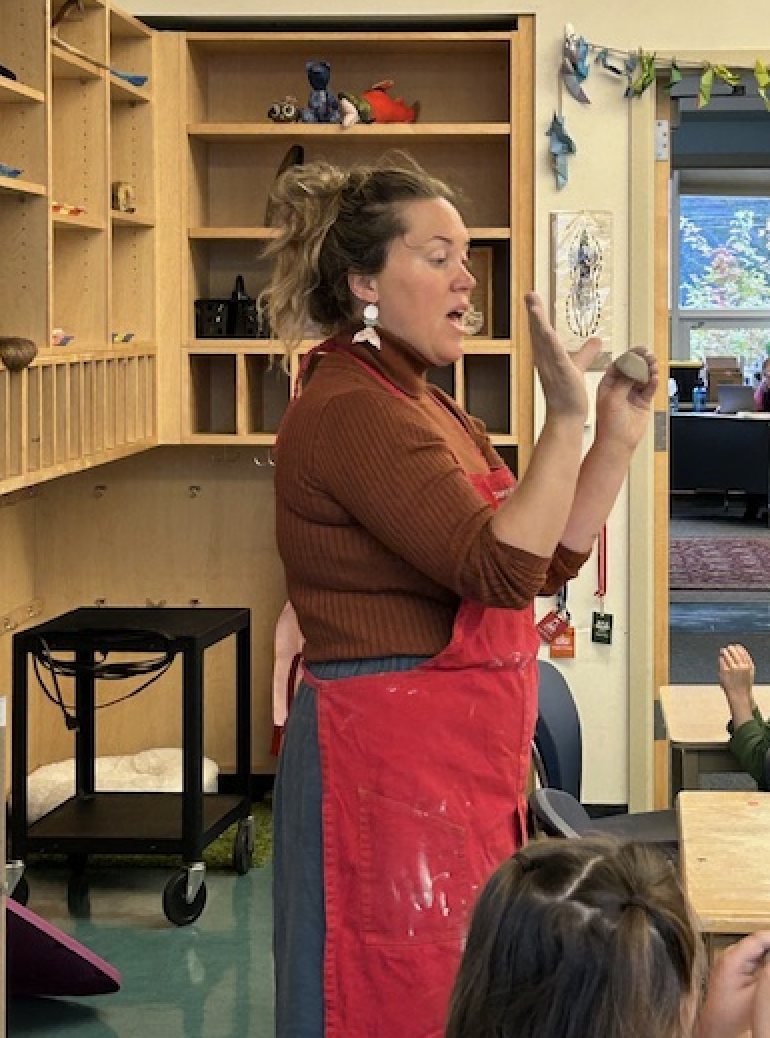
The Artist in the Schools Program (AIS) provides residencies in the visual and performing arts in the Juneau School District throughout the school year. The AIS program in Alaska is funded by the National Endowment for the Arts, the Alaska State Council on the Arts, the Alaska Children's Trust, and the Mockingbird Foundation.
The Juneau Arts & Humanities Council manages the Artists in the Schools Program. The Education Director, Summer Christiansen, is the coordinator at the Arts Council. Each year interested educators complete an application by the beginning of October. Although all applications will be considered, priority will be given to early-career, first year teachers, and those who haven't yet participated in an Artists Residency before.
Once accepted, the Education Director reaches out to both the artist and the educator to schedule the residency during the school year and helps to plan it, making sure both the artist and educator feel comfortable and excited about the work ahead.
Save
Save
Save
How Does a Residency Work?
Once an educator submits an application and it is approved, the Education Director will contact the selected artist to confirm their availability. If the artist is available, a planning meeting will be scheduled with the educator, artist, and Education Director.
During this meeting, the team will:
-
Define the desired learning outcomes, including the big idea, essential questions, and enduring understandings.
-
Align curriculum and assessment, including standards, benchmarks, learning goals, assessment activities, and evaluation criteria. Together, the educator and artist will determine how students will demonstrate their learning and how that learning will be assessed.
-
Develop a learning plan by outlining the sequence of lessons, instructional activities, and the number of sessions needed to support student success.
The Education Director will also review the artist's budget. Artist fees are calculated using a formula that includes teaching hours, lesson planning time, materials preparation, and educator–artist collaboration time.
During the residency, the Education Director provides ongoing support as needed while allowing the educator and artist to lead the learning experience. The JAHC requests photographs of the residency, along with any additional documentation that highlights the students' learning and the project's impact. At the end of residency, the artist will send the Education Director an invoice based off of the budget set before residency.
Ready to Participate?
Instructor Spotlight